
Iridology and Eye Health: Bridging Iris Analysis with Evidence-Based Supplements
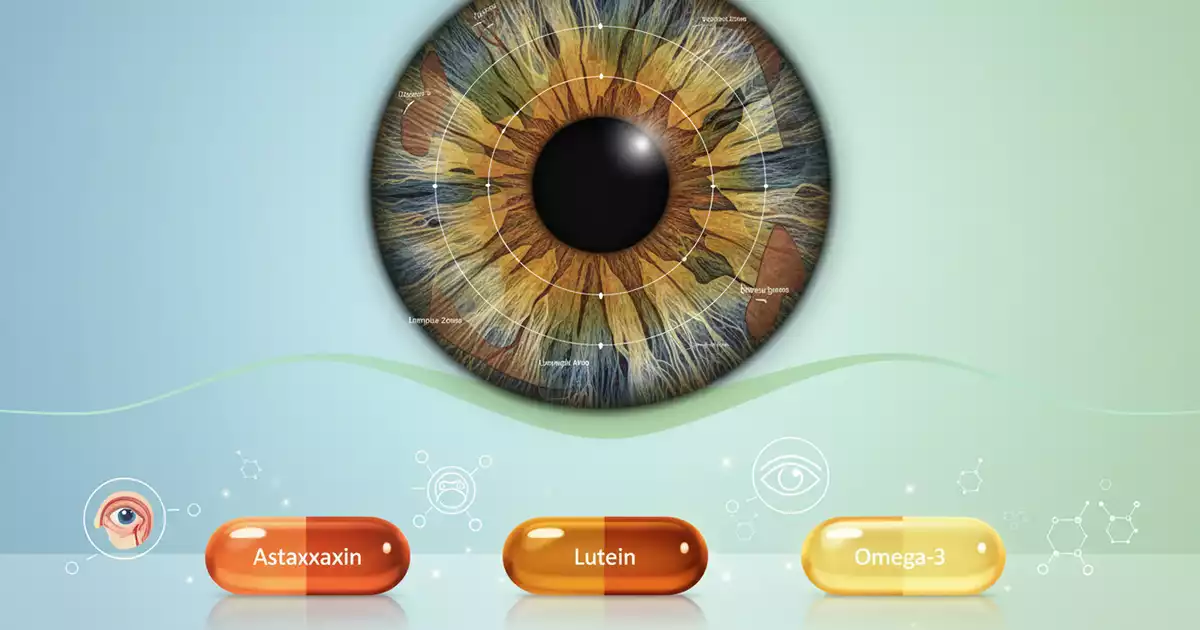
Iridology, a holistic practice that seeks insights into overall health through the analysis of patterns, colors, and markings in the iris, has long offered a unique perspective on well-being. WindSong Healing, in its history from 2004 to 2021, also offered an Iridology course certification program, deeply exploring the methods of pioneers like Bernard Jensen. This practice views the eye not just as an organ of sight, but as a window to systemic health, making iridology eye health a key area of focus.
However, while Iridology provides a unique perspective, modern science—particularly ophthalmology and nutritional science—offers measurable mechanisms for understanding and supporting ocular health and detecting systemic imbalances. This article aims to explore how the principles of iridology eye health align with the action of evidence-based eye health supplements. Our purpose is to educate and contextualize, demonstrating how traditional insights can be complemented by contemporary scientific discoveries for optimal vision and overall well-being. This exploration into iridology eye health is part of WindSong Healing’s commitment to integrating traditional practices with scientific validation.
Understanding Iridology for Eye and Systemic Health
Iridology is a non-invasive assessment technique where practitioners examine the iris—the colored part of the eye—to gain insights into a person’s constitutional strengths and weaknesses. It’s based on the premise that the iris reflects the health status of various organs and systems in the body. The practice of iridology eye health extends beyond just the eye itself, viewing it as a microcosm of the entire body.
A pivotal figure in modern Iridology was Dr. Bernard Jensen, who developed comprehensive iris maps correlating specific areas of the iris to different body parts and organs. Practitioners using Jensen’s method analyze iris fiber structure, pigmentations, lacunae (small openings), crypts (deeper openings), and other signs to identify genetic predispositions, organ weaknesses, and levels of toxicity. For example, certain markings in the “eye zone” of the iris might be interpreted as indicators of ocular stress or systemic issues affecting vision. This holistic approach to iridology eye health suggests that problems in the eye can be symptomatic of broader health concerns.
WindSong Healing’s Iridology course (2004-2021) taught practitioners to interpret these iris signs, focusing on how the eye reflects systemic health. The principles taught emphasized that optimal iridology eye health is a reflection of overall vitality, and that addressing underlying systemic imbalances could improve ocular conditions. While Iridology offers a fascinating and holistic perspective, it’s important to approach it as a complementary assessment tool, preparing the ground for evidence-based approaches that offer measurable outcomes.
The Scientific Lens: Modern Approaches to Eye Health
To understand how supplements can complement the goals of iridology eye health, it’s essential to delve into the physiological mechanisms of modern ocular health. The eye is a complex organ, and its health relies on intricate biological processes, including the integrity of the retina, macula, and optic nerve, as well as protection against oxidative stress and inflammation.
Common ocular conditions such as Age-related Macular Degeneration (AMD), cataracts, and dry eye syndrome are major causes of vision impairment. These conditions are often linked to factors like oxidative stress, chronic inflammation, exposure to blue light, and nutritional deficiencies. For instance, the macula, responsible for sharp central vision, is particularly vulnerable to oxidative damage due to its high metabolic rate and exposure to light.
Modern ophthalmology uses advanced diagnostic tools like Optical Coherence Tomography (OCT) to visualize retinal layers, fundus photography to document changes in the retina, and visual acuity tests to objectively measure vision. These tools provide quantifiable biomarkers and direct evidence of ocular health status, which can be correlated with the “detection of imbalances” sought in iridology eye health.
Scientific research has highlighted the critical role of specific nutrients in maintaining eye health. For example, a landmark study known as AREDS2 (Age-Related Eye Disease Study 2) demonstrated that a specific formulation of vitamins and antioxidants could significantly slow the progression of AMD. This emphasizes how targeted nutritional interventions, often delivered through eye health supplements, can directly impact ocular health. [AREDS2 Research Group, 2013]
Understanding these physiological mechanisms allows us to bridge the gap between the holistic insights of iridology eye health and the precise, measurable interventions offered by modern nutritional science. The goal of “systemic balance” in Iridology can be correlated with maintaining optimal biochemical conditions within the eye and body, where oxidative stress is minimized, and essential nutrients are abundant.

Bridging the Gap: Supplements for Optimal Eye Health
WindSong Healing’s transition to an evidence-based approach has led us to explore nutraceuticals that can modulate the same physiological systems impacting ocular health. These supplements offer a measurable and targeted way to support vision, complementing holistic practices like iridology eye health.
💊 Lutein and Zeaxanthin for Macular and Retinal Protection
Scientific Mechanism: Lutein and zeaxanthin are carotenoids that accumulate in the macula, forming the macular pigment. They act as powerful antioxidants and filter harmful blue light, protecting the photoreceptor cells from oxidative damage and light-induced stress. This protective role is crucial for maintaining sharp central vision and is a key component of modern iridology eye health support.
Benefits for Eye Health: Reduces the risk and slows the progression of Age-related Macular Degeneration (AMD), improves visual acuity, enhances contrast sensitivity, and protects against glare. They are essential for maintaining the structural integrity and function of the macula.
PubMed Study: A 2008 study in Investigative Ophthalmology & Visual Science found that higher dietary intake of lutein and zeaxanthin was associated with a reduced risk of advanced AMD. [SanGiovanni JP et al., 2008]
💊 Omega-3 EPA/DHA for Dry Eye Reduction and Retinal Health
Scientific Mechanism: Omega-3 fatty acids, particularly EPA (eicosapentaenoic acid) and DHA (docosahexaenoic acid), are integral components of retinal cell membranes. DHA is highly concentrated in the retina and plays a crucial role in photoreceptor function. EPA and DHA also have potent anti-inflammatory properties, modulating eicosanoid pathways to reduce inflammation on the ocular surface and within the retina. This makes them vital for comprehensive iridology eye health.
Benefits for Eye Health: Improves symptoms of dry eye syndrome by enhancing tear film quality and reducing inflammation of the meibomian glands. Supports retinal health, visual development, and may reduce the risk of glaucoma and diabetic retinopathy.
PubMed Study: A 2014 meta-analysis published in Ophthalmology concluded that omega-3 fatty acid supplementation significantly improved dry eye symptoms and signs. [Liu Y et al., 2014]
💊 Astaxanthin for Comprehensive Antioxidant Support
Scientific Mechanism: Astaxanthin is a potent carotenoid antioxidant, often called the “king of carotenoids,” with a unique molecular structure that allows it to span cell membranes, providing superior protection against oxidative stress. It can cross the blood-retinal barrier, delivering its antioxidant benefits directly to the eye tissues, including the retina and ciliary body. Its anti-inflammatory effects also contribute to overall iridology eye health.
Benefits for Eye Health: Protects against UV-induced damage, reduces eye fatigue and strain, improves visual acuity, and may offer protective effects against glaucoma, cataracts, and AMD by neutralizing free radicals.
PubMed Study: A 2002 study in Journal of Clinical Biochemistry and Nutrition demonstrated that astaxanthin supplementation improved visual acuity and reduced eye fatigue in subjects with asthenopia (eye strain). [Nitta T et al., 2002]
| Wellness Goal (Iridology) | Evidence-Based Supplement | Scientific Mechanism |
|---|---|---|
| Macular & Retinal Protection | Lutein & Zeaxanthin | Filter blue light, antioxidants in macula |
| Dry Eye & Inflammation Reduction | Omega-3 EPA/DHA | Eicosanoid modulation, ocular surface health |
| Comprehensive Antioxidant Support | Astaxanthin | Protects retina from oxidative stress |
The WindSong Healing Approach: Integrating Wisdom and Science for Vision
At WindSong Healing, our mission is to honor the wellness traditions that have shaped our history, while simultaneously embracing a rigorously evidence-based approach. The transition from Iridology course programs to supplement reviews is not to “replace” Iridology, but to offer additional, measurable tools that can support the same goals of iridology eye health and systemic well-being with greater precision and scientific validation. This integration allows for a more comprehensive approach to vision care.
We believe that optimal vision is a reflection of overall health, and that a multifaceted approach is often most effective. While Iridology offers a unique lens for understanding constitutional tendencies, modern ophthalmology and nutritional science provide direct, quantifiable interventions. It is crucial to emphasize the importance of individualization and consulting qualified healthcare professionals (ophthalmologists, optometrists, registered dietitians) before starting any supplementation regimen, ensuring that choices are safe and effective for your specific needs. Our commitment to iridology eye health now includes a strong scientific perspective.
To understand more about WindSong Healing’s history with Iridology, please visit our Iridology Course page.
Conclusion
Iridology eye health and evidence-based supplements like Lutein, Zeaxanthin, Omega-3 EPA/DHA, and Astaxanthin can be viewed as complementary paths leading to a common goal: promoting optimal vision and overall well-being. While Iridology offers a holistic assessment of systemic health reflected in the iris, modern science provides precise insights into the biochemical mechanisms that can be optimized with nutraceuticals for direct ocular support.
WindSong Healing is dedicated to exploring this bridge between traditional wisdom and cutting-edge science, providing reliable information so you can make informed decisions about your eye health. Optimal vision is multifaceted, and combining practices that resonate with you, supported by scientific evidence, can be the key to maintaining healthy eyes and a vibrant life. We invite you to explore these options and find what works best for your personal journey toward iridology eye health and comprehensive wellness.
Medical Disclaimer
This article explores the correlation between Iridology principles for eye health and evidence-based supplement recommendations. We do not claim that supplements replace holistic diagnostic practices, traditional assessments, or professional medical advice. Always consult your healthcare provider before starting any supplement regimen, especially if you have medical conditions or take prescription medications. Not intended to diagnose, treat, cure, or prevent any disease. Statements have not been evaluated by the FDA.
Last updated: January 12, 2026
Related keywords: #Iridology eye health #eye health supplements #vision supplements #lutein #zeaxanthin #omega3 #astaxanthin #Bernard Jensen #holistic eye care #evidence-based vision #macular degeneration #dry eye