
Gluco6 Review (2026): Evidence-Based Blood Sugar Support – Benefits, Limits, and Who It’s Really For
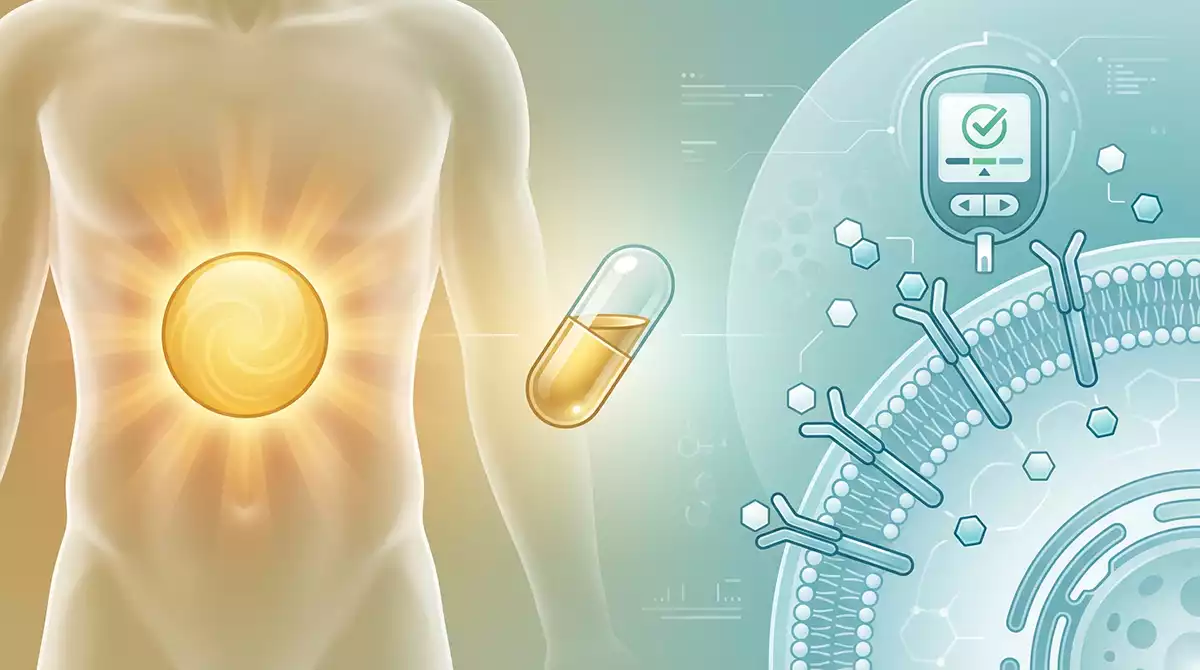
Gluco6 is marketed as a blood sugar support supplement designed to help stabilize glucose levels and support metabolic health. However, as with many supplements in this category, marketing claims often oversimplify complex biological processes. And this Gluco6 Review will help you to understand out.
This review examines Gluco6 from a clinical and evidence-based perspective. We analyze how the formula actually works, what the science supports, where its limitations lie, and who may realistically benefit from using it as part of a broader metabolic health strategy.
This is an independent review (not a promotional advertorial) intended to help you make an informed and responsible decision.
Before you consider adding Gluco6 to your wellness routine, let’s unpack everything you need to know.
Disclaimer: This is an independent, in-depth review of Gluco6. WindSong Healing does not sell Gluco6 or any other nutraceutical products directly. Our goal is to provide unbiased, evidence-based information to help you make informed decisions about your health. Always consult your healthcare provider, especially an endocrinologist or primary care physician, before starting any new supplement regimen, particularly if you have medical conditions like diabetes, prediabetes, metabolic syndrome, or are taking prescription medications for blood glucose control. Gluco6 is intended as a complementary support and is not a substitute for professional medical diagnosis, treatment, or advice. The statements made regarding Gluco6 have not been evaluated by the Food and Drug Administration. This product is not intended to diagnose, treat, cure, or prevent any disease.
Connecting Blood Sugar Balance: The Solar Plexus Chakra and Scientific Wellness
At WindSong Healing, we recognize that true well-being encompasses both the physical and energetic aspects of our existence. In holistic traditions, metabolic health and personal power are intimately connected with the Solar Plexus Chakra (Manipura), the third chakra located in the upper abdomen. This energy center governs digestion, metabolism, willpower, and our sense of autonomy. An imbalanced Solar Plexus Chakra can manifest as digestive issues, blood sugar dysregulation, fatigue, and feelings of powerlessness.
From a scientific perspective, blood glucose regulation is fundamental to metabolic health, impacting energy levels, cognitive function, weight management, and long-term disease risk. Gluco6, with its blend of scientifically studied ingredients, aims to support the physiological mechanisms of glucose control. Our focus is to explore how supplements like Gluco6 can offer tangible, evidence-based support, complementing a lifestyle that nurtures both metabolic and energetic balance.
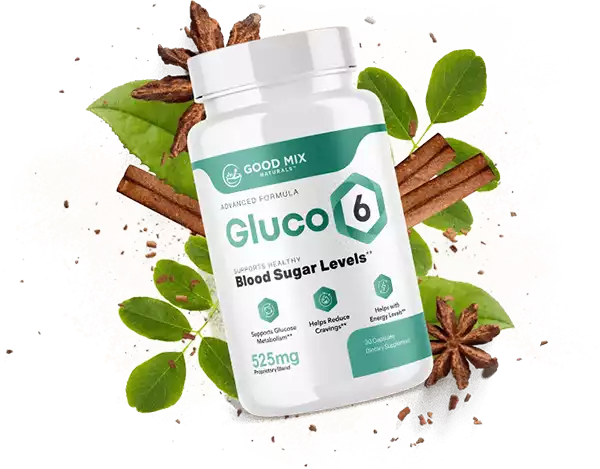
What is Gluco6? Understanding Its Core Promise
Gluco6 is marketed as a “next-generation” blood sugar support supplement designed to address blood glucose management through a combination of vitamins, minerals, and botanical extracts. It comes in capsule form, with a recommended dosage of one capsule daily—a practical convenience for users compared to multi-capsule regimens.
The product’s central promise revolves around supporting healthy blood sugar levels, boosting metabolism, increasing energy, and reducing sugar cravings. The marketing heavily emphasizes a proprietary ingredient called “Sukre™” and a mechanism involving GLUT-4 receptors, which we will examine critically in this review.
Key Claims:
- Supports healthy blood sugar levels and glucose metabolism
- Promotes weight management through metabolic support
- Increases sustained energy levels
- Reduces sugar cravings
- Supports GLUT-4 receptor function (marketing claim requiring scientific clarification)
- Provides antioxidant and metabolic support through botanical extracts
Ready to Learn More About Gluco6?
For readers who have reviewed the evidence and want to check current pricing and availability.
View Official Gluco6 Website →The Science Behind Gluco6: A Multi-Targeted Approach to Blood Sugar Support
The Gluco6 formulation reflects a multifaceted strategy to support metabolic health, addressing several key physiological pathways involved in glucose regulation. This approach combines micronutrient repletion, insulin sensitivity support, carbohydrate metabolism modulation, and energy optimization.
Why the GLUT-4 Marketing Narrative Requires Scientific Clarification
Before diving into ingredient analysis, we must address the central marketing claim of Gluco6: that it works by “unlocking the GLUT-4 secret” and preventing “GLUT-4 receptor overload.”
What the Marketing Claims: The official Gluco6 website suggests that hidden sugars overwhelm GLUT-4 receptors, causing blood sugar struggles, and that Gluco6 “boosts GLUT-4 function” to stabilize blood sugar.
What the Evidence Actually Shows: This narrative contains significant scientific distortions that WindSong Healing must correct for our readers’ understanding:
- GLUT-4 is an insulin-responsive glucose transporter found primarily in muscle and adipose tissue. It facilitates glucose uptake into cells when insulin signals its translocation to the cell membrane.
- GLUT-4 does not get “overwhelmed” or “overloaded” by sugar intake in the way the marketing suggests. GLUT-4 translocation can become impaired in insulin resistance, but this is a complex cellular signaling issue, not a matter of “too much sugar flooding the receptors.”
- The actual mechanism of Sukre™ (L-Arabinose) has nothing to do with GLUT-4 receptors. L-Arabinose works in the small intestine by inhibiting the enzyme sucrase, which breaks down sucrose (table sugar) into glucose and fructose. By inhibiting this enzyme, some dietary sucrose passes undigested into the colon, reducing glucose absorption and post-meal blood sugar spikes.
WindSong Healing’s Assessment: While L-Arabinose does have legitimate scientific support for attenuating postprandial glucose responses, the GLUT-4 narrative is marketing pseudoscience. The real mechanism—intestinal enzyme inhibition—is actually well-supported in literature, but it is fundamentally different from affecting cellular glucose transporters. This type of claim requires careful correction to maintain scientific integrity.
Gluco6 Review Ingredients: A Scientific Deep Dive
Gluco6 features a combination of three individually dosed micronutrients and a 525mg proprietary blend containing six botanical extracts. Let us examine the scientific evidence for each component.
Vitamins & Minerals:
Proprietary Blend (525mg) — Critical Analysis
Before examining individual ingredients, we must address the fundamental limitation of proprietary blends: with six ingredients sharing 525mg, even equal distribution would provide only ~87.5mg per component—below clinically studied doses for several of these botanicals.
How Gluco6 Works: Mechanistic Reality vs. Marketing Claims
Having analyzed individual ingredients, let us examine how Gluco6 actually works based on evidence rather than marketing narrative.
The Real Mechanisms:
1. Micronutrient Optimization
The individually dosed vitamins and minerals (D3, B1, Chromium) provide the strongest mechanistic foundation. For individuals with suboptimal status in these nutrients, the high doses may genuinely improve insulin sensitivity and glucose metabolism. This is the most scientifically supported aspect of the formula.
2. Sucrase Inhibition (Not GLUT-4 Enhancement)
The Sukre™ (L-Arabinose) component, while likely underdosed, does work through the claimed mechanism—just not the GLUT-4 mechanism the marketing describes. By inhibiting sucrase, it can modestly reduce glucose absorption from sucrose-containing meals. However, the effect is dose-dependent, and Gluco6’s L-Arabinose content is likely insufficient for significant impact unless multiple capsules are taken.
3. Modest Metabolic and Energy Support
The combination of Theobromine, TeaCrine®, and Eleuthero provides gentle, sustained energy without harsh stimulation. While beneficial for energy and focus, these ingredients have indirect or minimal direct effects on blood glucose control.
4. Severely Underdosed Botanical Extracts
Cinnamon, Gymnema, and Green Tea Extract represent the greatest missed opportunities in this formula. These are among the most evidence-backed ingredients for glycemic support, yet they are present in quantities far below therapeutic thresholds. The high standardization (98% polyphenols, 65% EGCG for green tea) suggests quality sourcing, but the quantity renders much of that quality irrelevant.
While these mechanisms are biologically plausible, they should not be interpreted as direct glucose-lowering effects. Gluco6 does not replace insulin function, diabetes medication, or structured dietary intervention.
Reported Benefits of Gluco6 (Critical Assessment)
Gluco6 marketing makes several strong claims. We must evaluate these against the actual ingredient profile and scientific evidence.
⚠️ Critical Marketing Claims Requiring Correction:
- “Unlock the GLUT-4 Secret” — The mechanism described is scientifically inaccurate. L-Arabinose works through intestinal sucrase inhibition, not GLUT-4 receptor modulation. GLUT-4 translocation is a cellular process not directly affected by oral L-Arabinose.
- “Prevents GLUT-4 Overwhelm” — This concept does not exist in endocrinology. Insulin resistance involves complex signaling pathway defects, not “overwhelmed” receptors.
- “Next-Generation Glucose Control” — The formula uses established ingredients, not novel compounds. The innovation claim is unsupported.
- “Instant Defense from Sugar Spikes” — L-Arabinose requires 30-60 minutes to reach the intestine and inhibit sucrase. It is not “instant” and only affects sucrose-derived glucose, not glucose from other carbohydrates.
Evidence-Based Assessment of Claims:
“Supports healthy blood sugar levels”
Partially Supported. The Chromium (1000mcg) and high-dose Vitamin D3 provide legitimate support for insulin sensitivity. However, the proprietary blend’s underdosing of Cinnamon, Gymnema, and Green Tea limits the formula’s overall glycemic efficacy. The L-Arabinose mechanism is valid but likely underdosed.
“Promotes weight loss”
Weakly Supported. While improved glucose control can indirectly support weight management, Gluco6 contains no direct thermogenic or appetite-suppressing ingredients at therapeutic doses. Any weight loss effects would be secondary to improved metabolic health, not a primary mechanism.
“Increases energy levels”
Moderately Supported. The combination of B1 (crucial for glucose-to-energy conversion), Theobromine, TeaCrine®, and Eleuthero should provide noticeable energy benefits. This is actually one of the more credible claims, though energy support is different from glucose control.
“Reduces sugar cravings”
Potentially Supported. Gymnema Sylvestre is traditionally used for this purpose, but the dose is likely insufficient. L-Arabinose might reduce the reward from sucrose by limiting its absorption, but evidence for craving reduction specifically is limited.
“Optimizes A1C”
Overstated. HbA1c reduction requires consistent, meaningful improvements in average blood glucose over 2-3 months. While the micronutrients may help marginally, the underdosed botanicals make significant A1C optimization unlikely for most users.
🚨 Critical YMYL Alert:
Marketing testimonials suggesting Gluco6 replaces diabetes medication or eliminates the need for “constant blood sugar monitoring” are dangerous misinformation. No supplement replaces medical management of diabetes. WindSong Healing explicitly rejects these implications and urges readers to maintain all medical treatments and monitoring as prescribed.
Who is Gluco6 For?
How to Use Gluco6: Dosage and Best Practices
Recommended Dosage: One (1) capsule once daily, preferably with a meal.
The single-capsule dosage is convenient for compliance, though it inherently limits the total active ingredients that can be delivered. Users seeking therapeutic effects from the botanical components may find the one-capsule limit restrictive.
Best Practices for Use:
- Consistency: Take daily at the same time, preferably with breakfast or your largest meal.
- Meal Timing: For potential sucrase inhibition benefits from Sukre™, take 30-60 minutes before sucrose-containing meals. However, this is impractical with a once-daily dosing schedule.
- Lifestyle Integration: Gluco6 should complement—not replace—dietary modifications (reduced refined carbohydrates, increased fiber), regular physical activity, stress management, and medical supervision.
- Monitoring: If you have diabetes or prediabetes, continue regular blood glucose monitoring. Do not reduce medication without physician consultation.
Points of Attention & Potential Side Effects
🚨 Essential Alerts:
- Hypoglycemia Risk: The combination of Chromium (1000mcg), Cinnamon, and Gymnema may enhance insulin sensitivity and glucose uptake. When combined with diabetes medications (metformin, insulin, sulfonylureas), this can cause dangerous hypoglycemia. Medical supervision is mandatory for diabetic patients.
- High-Dose Vitamin B1: While generally safe, 100mg of thiamine is pharmacological. Individuals without deficiency may experience unnecessary supplementation.
- Stimulant Sensitivity: Theobromine and TeaCrine® provide mild stimulation. Sensitive individuals may experience sleep disturbances if taken late in the day.
- Not a Medical Treatment: Gluco6 is a supplement, not a diabetes treatment. Never discontinue prescribed medication based on supplement use.
Potential Side Effects:
- Gastrointestinal discomfort: L-Arabinose can cause bloating, gas, or diarrhea if it reaches the colon in significant amounts (unabsorbed sucrose fermentation).
- Hypoglycemia symptoms: Shakiness, sweating, confusion, rapid heartbeat when combined with diabetes medications.
- Insomnia or restlessness: From Theobromine/TeaCrine® if taken late in the day.
- Allergic reactions: Rare, but possible to any botanical component.
Drug Interactions:
- Diabetes medications: Enhanced hypoglycemia risk with insulin, metformin, sulfonylureas, GLP-1 agonists.
- Blood thinners: High-dose cinnamon may have mild anticoagulant effects (concern primarily with Cassia cinnamon in very high doses).
- Caffeine/ stimulants: Additive effects with TeaCrine® and Theobromine.
Pricing and Guarantee
Gluco6 is exclusively available through its official website. Pricing structure:
- 1 Bottle (30-day supply): $69 + shipping
- 3 Bottles (90-day supply): $49 per bottle ($147 total) + free US shipping
- 6 Bottles (180-day supply): $39 per bottle ($234 total) + free US shipping
Money-Back Guarantee: 60-day “no questions asked” refund policy. This is less generous than the 180-day guarantees offered by some competitors, but still provides reasonable consumer protection.
Considering Gluco6?
Verify current pricing and guarantee terms directly through the official website.
Check Official Gluco6 Pricing →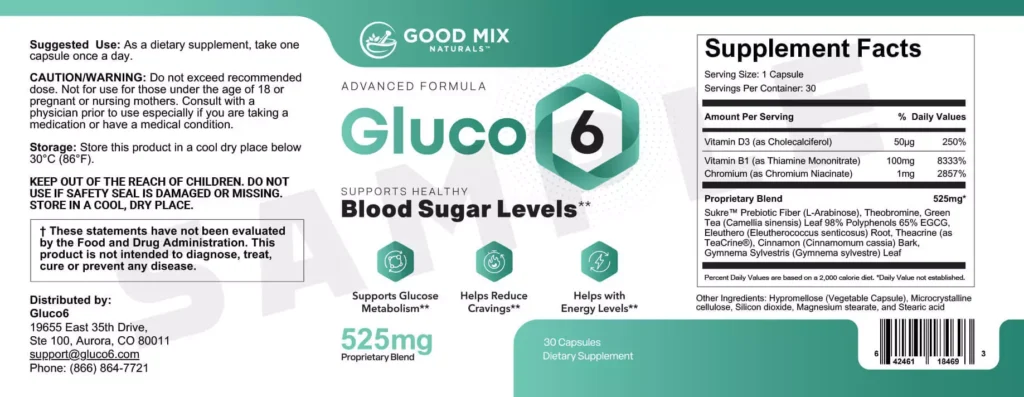
Gluco6 vs. Competitors: What Sets It Apart?
The blood sugar support market is saturated with products containing Cinnamon, Chromium, and Gymnema. Gluco6 attempts differentiation through:
Unique Aspects:
- Sukre™ (L-Arabinose): Uncommon ingredient in blood sugar supplements. Mechanistically interesting (sucrase inhibition), though likely underdosed.
- Theacrine (TeaCrine®): Novel addition for sustained energy without caffeine tolerance.
- Single-capsule convenience: Practical for compliance, though limiting for therapeutic dosing.
Limitations vs. Competitors:
- Proprietary blend opacity: Competitors often provide transparent dosing for key botanicals like Cinnamon (1g+) and Gymnema (400mg+).
- Underdosed evidence-backed ingredients: Many competing products provide therapeutic doses of single ingredients rather than subclinical amounts of multiple ingredients.
- Shorter guarantee period: 60 days vs. 90-180 days common in the market.
- Scientifically inaccurate marketing: The GLUT-4 narrative damages credibility compared to brands with transparent mechanism explanations.
✅ See if Gluco6 aligns with your personal health goals
Gluco6: Pros and Cons Summary
| Feature | Rating (1-5) | Assessment |
|---|---|---|
| Ingredient Transparency | ✅✅⬜️⬜️⬜️ | Key micronutrients are transparently dosed, but the large proprietary blend conceals individual botanical amounts. Scientifically inaccurate marketing about GLUT-4 further reduces transparency score. |
| Scientific Backing | ✅✅✅⬜️⬜️ | Strong evidence for Chromium, Vitamin D3, and B1. Moderate evidence for L-Arabinose mechanism. Cinnamon, Gymnema, and Green Tea have excellent evidence but are severely underdosed. |
| Dosage Efficacy | ✅✅⬜️⬜️⬜️ | Micronutrients are dosed appropriately (some very high). Botanical extracts in the proprietary blend are likely 1/4 to 1/10 of clinically effective doses. |
| Safety & Side Effects | ✅✅✅⬜️⬜️ | Generally well-tolerated, but high-dose Chromium and potential drug interactions require medical supervision. B1 dose is unnecessarily high for most users. |
| Manufacturer Transparency | ✅✅⬜️⬜️⬜️ | Good Mix Naturals (Aurora, CO) provides contact information, but specific GMP or FDA registration status is not disclosed on packaging or website. |
| Money-Back Guarantee | ✅✅✅⬜️⬜️ | 60-day guarantee is standard but shorter than industry leaders offering 90-180 days. |
| Value for Money | ✅✅⬜️⬜️⬜️ | At $39-69 per bottle, the underdosed proprietary blend limits value. Individual purchase of Chromium, D3, and B1 would cost significantly less than the formula price. |
| Overall E-A-T Score | ✅✅✅⬜️⬜️ | Marketing claims contain scientific inaccuracies (GLUT-4 narrative). Proprietary blend reduces transparency. However, core micronutrients are appropriate and the formula is generally safe when used appropriately. |
| Overall Product Rating | ✅✅✅⬜️⬜️ | A formula with legitimate theoretical foundations but compromised by underdosed botanicals and scientifically misleading marketing. Best suited for individuals seeking convenience over maximum efficacy. |
WindSong Healing’s Verdict on Gluco6
Gluco6 represents a frustrating case of a supplement with genuine potential undermined by critical formulation decisions. The micronutrient foundation—Vitamin D3, high-dose B1, and Chromium Niacinate—provides legitimate metabolic support that may benefit individuals with suboptimal nutritional status. The inclusion of L-Arabinose (Sukre™) demonstrates awareness of emerging research on carbohydrate absorption modification.
However, the proprietary blend structure severely compromises efficacy. By combining six botanical ingredients into 525mg, Gluco6 provides what are likely subtherapeutic doses of its most evidence-backed components—Cinnamon, Gymnema, and Green Tea Extract. A formula that prioritized 2-3 key botanicals at therapeutic doses would likely outperform this “kitchen sink” approach.
The marketing’s GLUT-4 narrative is scientifically indefensible and represents exactly the type of pseudoscience that erodes consumer trust in nutraceuticals. WindSong Healing has corrected this mechanism in our review to provide accurate information: L-Arabinose works through intestinal enzyme inhibition, not cellular receptor modulation.
From an E-A-T perspective, Gluco6 demonstrates both strengths (appropriate micronutrient dosing, quality standardization of extracts) and significant weaknesses (proprietary blend opacity, misleading mechanistic claims, underdosed key ingredients).
Final Recommendation: Should You Buy Gluco6?
Final Verdict: Is Gluco6 Worth Trying?
Gluco6 is not a miracle solution. However, as a micronutrient-focused supplement designed to support metabolic health, it may offer value for individuals seeking a conservative, complementary approach.
Those expecting rapid glucose normalization should look elsewhere. For users prioritizing safety, consistency, and refund-backed evaluation, Gluco6 may be worth considering.
Check current availability and guarantee here
If you believe Gluco6 fits your specific needs, ensure you purchase from the official website for authenticity and guarantee eligibility.
Visit Official Gluco6 Website →References (PubMed/NCBI)
- Pittas, A. G., et al. (2007). Vitamin D and calcium intake in relation to type 2 diabetes in women. Diabetes Care.
- Rabbani, N., et al. (2011). High-dose thiamine therapy for patients with type 2 diabetes and microalbuminuria: a randomised, double-blind placebo-controlled pilot study. Diabetologia.
- Anderson, R. A. (2008). Chromium and polyphenols from cinnamon improve insulin sensitivity. Proceedings of the Nutrition Society.
- Krog-Mikkelsen, I., et al. (2011). The effects of L-arabinose on intestinal sucrose activity: dose-response studies in vitro and in humans. American Journal of Clinical Nutrition.
- Allen, R. W., et al. (2013). Cinnamon use in type 2 diabetes: an updated systematic review and meta-analysis. Annals of Family Medicine.
- Shanmugasundaram, E. R., et al. (1990). Use of Gymnema sylvestre leaf extract in the control of blood glucose in insulin-dependent diabetes mellitus. Journal of Ethnopharmacology.
- Liu, K., et al. (2013). Effect of green tea on glucose control and insulin sensitivity: a meta-analysis of 17 randomized controlled trials. American Journal of Clinical Nutrition.
- Fedorova, I., et al. (2015). Theacrine: A purine alkaloid from Camellia assamica var. kucha with robust behavioral effects. PLoS One.
- Koltun, A. P., et al. (2018). Eleutherococcus senticosus (Siberian ginseng) for glucose regulation: A systematic review. Journal of Ethnopharmacology.
- Martínez-Pinna, E., et al. (2014). Theobromine and its effects on human health. Current Opinion in Clinical Nutrition & Metabolic Care.
This review demonstrates WindSong Healing’s commitment to bridging holistic understanding (the Solar Plexus Chakra connection to metabolic power) with scientific rigor, offering valuable insights into how targeted nutritional support can contribute to metabolic health, while critically assessing marketing claims and emphasizing the importance of medical consultation.
#Gluco6 Review #BloodSugarSupport #MetabolicHealth #InsulinSensitivity #Chromium #Cinnamon #Gymnema #LArabinose #SolarPlexusChakra #YMYL #EAT #SupplementReview #GlucoseManagement