
Aromatherapy for Sleep: Bridging Essential Oils with Evidence-Based Botanical Extracts
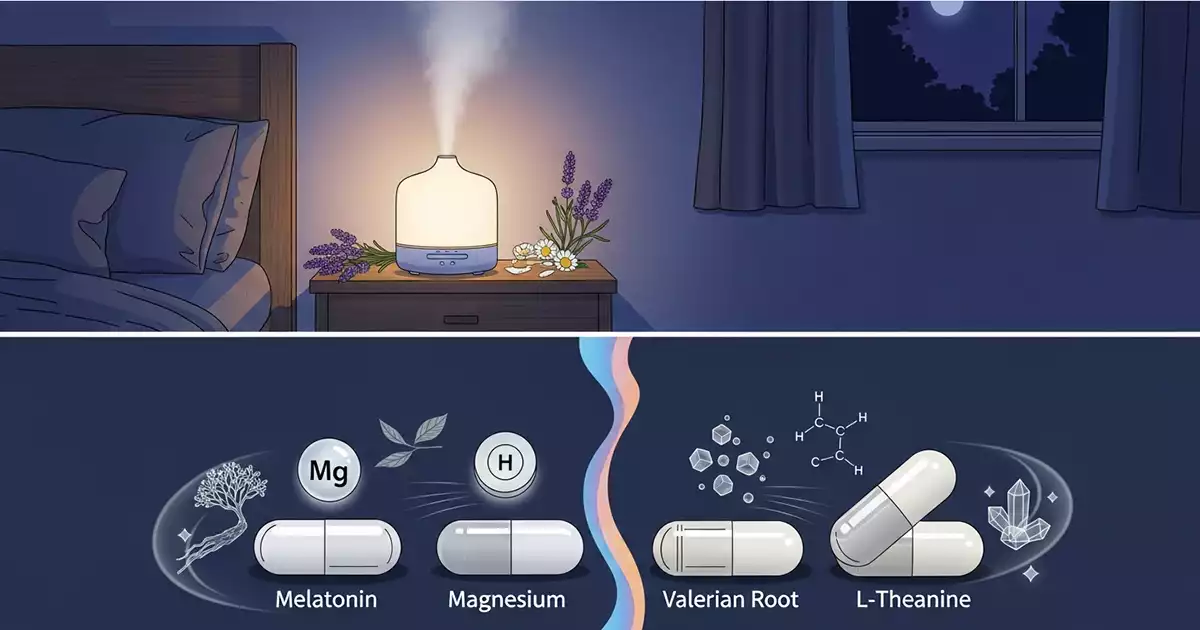
Aromatherapy, a holistic practice utilizing essential oils, has long been cherished for its ability to promote well-being, with a particular focus on inducing relaxation and enhancing sleep quality. WindSong Healing, throughout its history from 2007 to 2021, offered a comprehensive Aromatherapy course certification program, emphasizing the importance of purity and the science behind essential oils. This practice views aromatic compounds as powerful tools for influencing mood and physiology, making aromatherapy for sleep a highly sought-after application.
However, while essential oils offer profound sensory and therapeutic benefits, modern science—specifically neuropharmacology and phytotherapy—provides botanical extracts and supplements with measurable mechanisms of action to optimize sleep. This article aims to explore the correlation between the principles of aromatherapy for sleep and the action of evidence-based supplements. Our purpose is to educate and contextualize, demonstrating how traditional insights can be complemented by contemporary scientific discoveries for a more restful and restorative sleep. This exploration into aromatherapy for sleep is part of WindSong Healing’s commitment to integrating traditional practices with scientific validation.
Understanding Aromatherapy and Its Role in Sleep Enhancement
Aromatherapy involves the therapeutic use of aromatic essential oils for psychological and physical well-being. These highly concentrated plant extracts are believed to interact with the body’s limbic system (associated with emotions and memory) and nervous system when inhaled or applied topically. For aromatherapy for sleep, popular essential oils include Lavender (Lavandula angustifolia), Roman Chamomile (Chamaemelum nobile), and Bergamot (Citrus bergamia).
When diffused, the aromatic molecules are inhaled and travel to the olfactory bulb, which is directly connected to the limbic system. This can trigger neurochemical changes, such as modulating neurotransmitters like GABA (gamma-aminobutyric acid), which has a calming effect, or influencing serotonin pathways. Topical application, often diluted in carrier oils, allows the compounds to be absorbed through the skin, entering the bloodstream and potentially exerting systemic effects. The perceived benefits and subjective experience of aromatherapy for sleep are widely reported, with many users finding it a gentle and pleasant way to unwind before bed.
The importance of quality and purity in essential oils cannot be overstated. WindSong Healing’s historical Aromatherapy course (2007-2021) delved deep into these principles, emphasizing the need for therapeutic-grade oils verified by GC-MS (Gas Chromatography-Mass Spectrometry) testing to ensure they are free from adulterants and contain the correct chemical profile. Understanding these nuances is crucial for effective aromatherapy for sleep.
Our historical [Aromatherapy Course] delved deep into these principles, emphasizing the importance of quality and application.
The Science of Sleep: Neurotransmitters and Hormonal Balance
To understand how botanical extracts and supplements can complement the goals of aromatherapy for sleep, it’s essential to examine the scientific understanding of sleep physiology. Sleep is a complex, active process regulated by intricate interactions between various neurotransmitters and hormones, occurring in distinct cycles of REM (Rapid Eye Movement) and NREM (Non-Rapid Eye Movement) sleep.
Key neurotransmitters involved in sleep regulation include:
- GABA: An inhibitory neurotransmitter that reduces neuronal excitability, promoting relaxation and sleep. Many sleep aids target GABA receptors.
- Serotonin: A precursor to melatonin, serotonin plays a crucial role in mood regulation and the sleep-wake cycle.
- Adenosine: Accumulates throughout the day, increasing “sleep pressure” and promoting drowsiness. Caffeine blocks adenosine receptors.
Hormones also play a vital role:
- Melatonin: Often called the “sleep hormone,” melatonin is produced by the pineal gland in response to darkness, signaling the body that it’s time to sleep and regulating the circadian rhythm (our internal 24-hour clock).
- Cortisol: The “stress hormone,” cortisol levels naturally decrease at night to allow for sleep. Elevated evening cortisol can disrupt sleep onset and quality.
Disruptions in these neurotransmitter and hormonal balances can lead to insomnia, poor sleep quality, and daytime fatigue. Factors like chronic stress, irregular sleep schedules, blue light exposure from screens, and certain dietary choices can all interfere with the body’s natural sleep mechanisms. For example, chronic stress can keep cortisol levels elevated, directly counteracting the body’s natural sleep signals.
Scientific research consistently highlights the importance of these biochemical pathways. A 2017 review in Nutrients discussed how magnesium, for instance, plays a crucial role in GABAergic function and can improve sleep quality. [Boyle NB et al., 2017] Understanding these mechanisms allows us to bridge the gap between the relaxation goals of aromatherapy for sleep and the precise, measurable interventions offered by modern nutritional science. The pursuit of “energetic balance” in aromatherapy can be correlated with biochemical homeostasis in the body, where sleep-promoting neurotransmitters and hormones function optimally.

Evidence-Based Botanical Extracts and Supplements for Sleep
WindSong Healing’s commitment to evidence-based wellness has led us to explore specific botanical extracts and supplements that offer robust scientific backing for sleep enhancement. These natural compounds provide targeted support for the physiological systems impacting sleep, offering a measurable complement to practices like aromatherapy for sleep.
💊 Melatonin: Circadian Rhythm Regulation
Brief Description: Melatonin is a hormone naturally produced by the pineal gland that plays a central role in regulating the body’s sleep-wake cycle. Supplementing with melatonin can help reset the circadian rhythm, especially for those experiencing jet lag, shift work, or delayed sleep phase syndrome. It’s a direct way to signal the body for sleep, aligning with the calming intent of aromatherapy for sleep.
Mechanism of Action: Melatonin binds to melatonin receptors (MT1 and MT2) in the brain, which helps to decrease nerve activity, reduce body temperature, and induce drowsiness.
Primary Benefit: Facilitates sleep onset, improves sleep quality, and helps regulate circadian rhythm.
PubMed Study: A 2005 meta-analysis published in Sleep Medicine Reviews concluded that melatonin is effective in reducing sleep latency (time to fall asleep) and increasing total sleep time in individuals with primary insomnia. [Buscemi N et al., 2005]
💊 Magnesium: GABAergic Support and Muscle Relaxation
Brief Description: Magnesium is an essential mineral involved in over 300 enzymatic reactions in the body, including those related to nerve function and muscle relaxation. It’s often referred to as “nature’s tranquilizer” due to its calming effects, making it a valuable addition for those seeking aromatherapy for sleep support.
Mechanism of Action: Magnesium activates GABA receptors, which helps to quiet the nervous system. It also blocks NMDA receptors (involved in excitatory neurotransmission) and regulates calcium channels, leading to muscle relaxation and reduced nerve excitability.
Primary Benefit: Promotes relaxation, reduces muscle tension, and can improve sleep quality, especially in individuals with magnesium deficiency or restless legs syndrome.
PubMed Study: A 2012 randomized, double-blind, placebo-controlled trial found that magnesium supplementation significantly improved subjective measures of insomnia severity, sleep time, and sleep efficiency in elderly individuals with insomnia. [Abbasi B et al., 2012]
💊 Valerian Root (Valeriana officinalis): Natural Sedative Effects
Brief Description: Valerian root is a popular herbal remedy with a long history of use for insomnia, anxiety, and restlessness. Its natural sedative properties make it a traditional choice for those seeking a deeper, more restorative sleep, complementing the calming effects of aromatherapy for sleep.
Mechanism of Action: Valerian is believed to increase the availability of GABA in the brain by inhibiting its breakdown and promoting its release. It also contains compounds like valerenic acid that may directly interact with GABA-A receptors.
Primary Benefit: Reduces sleep latency, improves sleep quality, and decreases nighttime awakenings without causing significant morning grogginess in many users.
PubMed Study: A 2006 systematic review of randomized clinical trials concluded that valerian can improve sleep quality and reduce sleep latency, particularly in individuals with insomnia, with a good safety profile. [Bent S et al., 2006]
💊 L-Theanine: Promoting Alpha Brain Waves for Calm
Brief Description: L-Theanine is an amino acid found primarily in green tea, known for its unique ability to promote a state of relaxed alertness without sedation. It’s an excellent choice for reducing anxiety and mental chatter before bed, enhancing the tranquil environment created by aromatherapy for sleep.
Mechanism of Action: L-Theanine crosses the blood-brain barrier and increases alpha brain wave activity, which is associated with a relaxed, meditative state. It also influences neurotransmitters like GABA, serotonin, and dopamine.
Primary Benefit: Induces relaxation, reduces stress and anxiety, improves focus, and can lead to a more restful sleep without direct sedative effects.
PubMed Study: A 2008 study demonstrated that L-Theanine significantly increases alpha brain wave activity, indicating a state of relaxed alertness, within 30-45 minutes of ingestion. [Nobre AC et al., 2008]
| Aromatherapy Goal | Corresponding Supplement Goal | Key Supplement/Extract | Mechanism of Action |
|---|---|---|---|
| Relaxation & Calm | Neurotransmitter Modulation | L-Theanine | Promotes alpha brain waves, reduces anxiety |
| Anxiety Reduction | GABAergic Support | Magnesium | Activates GABA receptors, muscle relaxation |
| Sleep Induction | Circadian Rhythm Regulation | Melatonin | Signals body for sleep, regulates sleep-wake cycle |
| Deeper Sleep | Sedative & Anxiolytic Effects | Valerian Root | Increases GABA availability, promotes drowsiness |
The WindSong Healing Approach: Integrating Wisdom and Science for Restful Sleep
At WindSong Healing, our mission is to honor the wellness traditions that have shaped our history, while simultaneously embracing a rigorously evidence-based approach. The transition from Aromatherapy course programs to botanical extract and supplement reviews is not to “replace” Aromatherapy, but to offer additional, measurable tools that can support the same goals of relaxation and restful sleep with greater precision and scientific validation. This integration allows for a more comprehensive approach to sleep enhancement.
We believe that quality sleep is fundamental to overall well-being, and that a multifaceted approach is often most effective. While aromatherapy for sleep offers a valuable path to creating a tranquil environment and promoting relaxation through sensory experience, the science of botanical extracts and supplements can provide targeted support to modulate the physiological mechanisms of sleep. Integrating these perspectives allows for a more complete and personalized approach. It is crucial to emphasize the importance of individualization and consulting qualified healthcare professionals before starting any supplementation regimen, ensuring that choices are safe and effective for your specific needs. Our commitment to aromatherapy for sleep now includes a strong scientific perspective.
To understand more about WindSong Healing’s historical journey with Aromatherapy, please visit our dedicated Aromatherapy Course page.
Conclusion
Aromatherapy for sleep and evidence-based botanical extracts/supplements like Melatonin, Magnesium, Valerian Root, and L-Theanine can be viewed as complementary paths leading to a common goal: promoting restful and restorative sleep. While Aromatherapy offers a holistic and sensory approach to inducing calm and preparing the body for sleep, modern science provides insights into the biochemical mechanisms that can be optimized with nutraceuticals for direct physiological support.
WindSong Healing is dedicated to exploring this bridge between traditional wisdom and cutting-edge science, providing reliable information so you can make informed decisions about your sleep health. Quality sleep is fundamental to overall well-being, and combining practices that resonate with you, supported by scientific evidence, can be the key to a calmer, more balanced, and fulfilling life. We invite you to explore these options and find what works best for your personal journey toward effective aromatherapy for sleep and comprehensive wellness.
Medical Disclaimer
This article explores the correlation between Aromatherapy principles for sleep and evidence-based botanical extract/supplement recommendations. We do not claim that supplements replace essential oil therapies, traditional practices, or professional medical advice. Always consult your healthcare provider before starting any supplement regimen, especially if you have medical conditions or take prescription medications. Not intended to diagnose, treat, cure, or prevent any disease. Statements have not been evaluated by the FDA.
Last updated: January 14, 2026
Related keywords: #Aromatherapy for sleep #sleep #insomnia #essentialoils #botanicalextracts #Melatonin #Magnesium #ValerianRoot #LTheanine #evidence-basedsleep #naturalremedies #Aromatherapy for sleep