Herbal Medicine Program — Content Evolution Notice
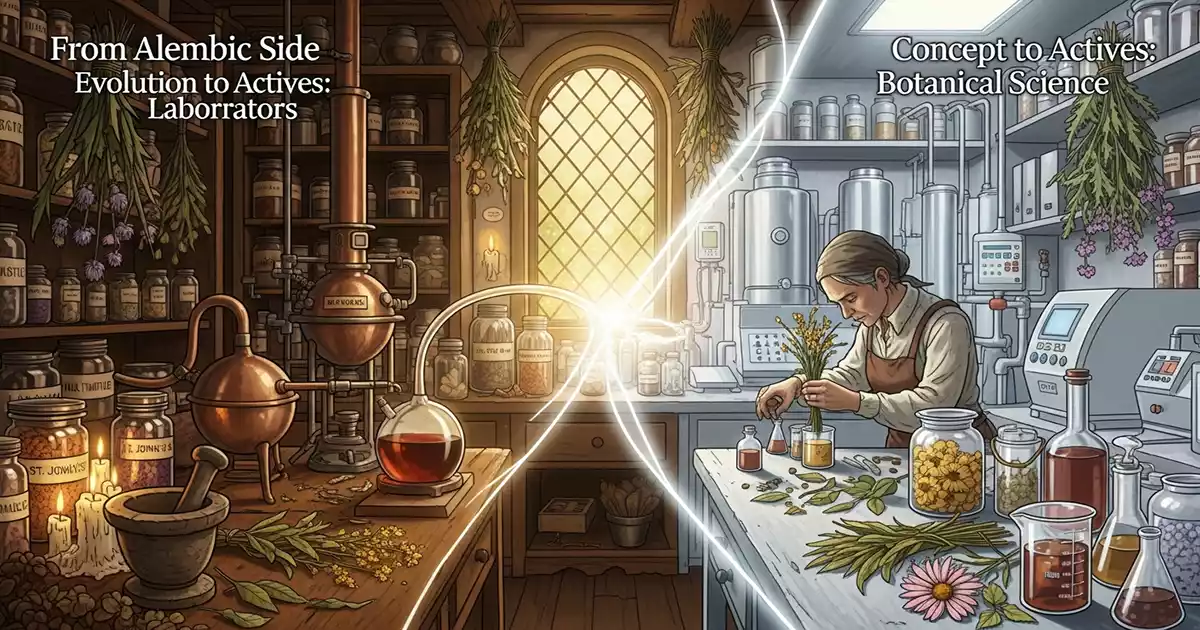
This page originally detailed WindSong Healing’s herbal medicine program certification (2009-2021: WindSong School of Healing Ltd. 2009-2019, rebranded to Aarastyn Holistic Healing Arts 2020-2021).
As phytotherapy and analytical chemistry research advanced, WindSong Healing transitioned from traditional Western herbalism to evidence-based supplement reviews featuring standardized botanical extracts—using peer-reviewed clinical trials on isolated phytocompounds (silymarin, hypericin, echinacosides) and pharmacokinetic data instead of whole plant preparations. The domain expired in March 2021 and was reacquired in 2025, pivoting to evidence-based supplement reviews that deliver consistent therapeutic compounds for measurable health outcomes.
While WindSong’s herbal medicine program honored millennia of traditional knowledge from Eclectic physicians and Native American uses, modern analytical techniques now allow for precise quantification of active constituents. This evolution bridges ancient wisdom with pharmaceutical-grade standardization, offering actionable supplement protocols validated by rigorous clinical research.
What This Page Used To Contain
From 2009-2021, this content focused on:
- Herbal Medicine Program Certification: 12-month intensive practitioner program (360 clinical hours) covering Western herbal traditions, materia medica, and clinical applications
- Materia Medica: In-depth study of 40+ medicinal plants, including Milk Thistle (Silybum marianum) for liver support, St. John’s Wort (Hypericum perforatum) for mood, Echinacea (Echinacea purpurea) for immune modulation, Ginkgo (Ginkgo biloba) for cognitive function, and Valerian (Valeriana officinalis) for sleep
- Plant Identification & Botany: Field trips for plant identification, understanding botanical taxonomy, and ethical wildcrafting practices
- Herbal Preparations: Hands-on training in creating tinctures (alcohol extracts), infusions (hot water extracts for leaves/flowers), decoctions (simmered extracts for roots/barks), poultices (topical applications), salves (oil-based ointments), and capsules
- Formulation Principles: Creating synergistic herbal blends, understanding energetic properties (hot/cold, damp/dry, stimulating/sedating), and constitutional prescribing based on individual client needs
- Theoretical Framework: Western herbal tradition, drawing from Eclectic physicians (19th-century American medical movement integrating botanical medicine), Samuel Thomson’s physiological herbalism, and modern clinical herbalism principles
- Applications: Digestive health, mood support, immune modulation, cognitive function, pain management, skin conditions
- Graduated Practitioners: ~138 certified between 2009-2021
Why we changed: Practitioners increasingly asked, “What standardized botanical extracts produce measurable outcomes?” rather than relying on variable whole plant preparations (e.g., raw St. John’s Wort potency varies significantly by harvest, drying, and storage). As YMYL (Your Money or Your Life) content standards evolved, evidence-based phytocompound supplements offered actionable guidance backed by pharmacology and clinical research—HPLC analysis, pharmacokinetic data, and double-blind trials.
Historical context preserved: WindSong’s herbal medicine program graduated 138 practitioners between 2009-2021 (operating as WindSong School of Healing Ltd. 2009-2019, rebranded to Aarastyn Holistic Healing Arts 2020-2021). We archive this legacy transparently—not to dismiss the profound historical and cultural value of herbal medicine (many plants have FDA-recognized medicinal uses), but to explain why peer-reviewed phytotherapy now meets modern evidence standards for health content more rigorously.
Science-Backed Alternatives to Herbal Medicine Goals
| Wellness Goal | Herbal Medicine Approach | Evidence-Based Supplement | Active Phytocompound | Dosage |
|---|---|---|---|---|
| Liver Support | Milk Thistle tincture (Silybum marianum) | Milk Thistle Extract | Silymarin (80% standardized) | 150mg-300mg 2x/day |
| Mood Support | St. John’s Wort infusion (Hypericum perforatum) | St. John’s Wort Extract | Hypericin (0.3% standardized) | 300mg 3x/day |
| Immune Modulation | Echinacea purpurea decoction | Echinacea Extract | Echinacosides (4% standardized) | 200mg 3x/day |
Key difference: While WindSong’s herbal medicine program focused on whole plant preparations and traditional energetic properties, modern phytotherapy isolates specific phytocompounds—silymarin from milk thistle (hepatoprotective via membrane stabilization), hypericin from St. John’s wort (mood support via neurotransmitter reuptake inhibition), echinacosides from echinacea (immune modulation via phagocytosis stimulation)—that produce measurable physiological effects. These are validated through HPLC analysis, receptor binding assays, and double-blind trials, offering consistent dosing and predictable outcomes.
Detailed Supplement Alternatives
✅ Liver Support → Milk Thistle Extract (Silymarin)
Original herbal medicine program focus:
WindSong’s herbal medicine program taught the preparation and use of Milk Thistle (Silybum marianum) tinctures and infusions for “liver detoxification and protection.” Practitioners learned about its traditional use in European folk medicine for hepatic support, particularly for jaundice and liver congestion, and its energetic properties (cooling, drying). The program emphasized the importance of using high-quality, sustainably harvested raw herbs.
Modern equivalent: Milk Thistle Extract (Silymarin)
Silymarin is the active flavonoid complex in milk thistle, standardized to 80% for consistent dosing. Unlike whole plant preparations (where silymarin content can vary widely), standardized silymarin’s hepatoprotective effects are measurable via liver enzyme levels (ALT, AST) and oxidative stress markers (malondialdehyde – MDA). It acts by stabilizing hepatocyte membranes, stimulating protein synthesis for liver cell regeneration, and exhibiting potent antioxidant and anti-inflammatory properties.
What we offer now:
👉 [Best Milk Thistle Supplements for Liver Support] — Reviews comparing standardized silymarin extracts (80% is common) vs. phytosome formulations (e.g., Siliphos® for enhanced bioavailability), optimal dosing (150-300mg 2-3x/day), and third-party testing for heavy metals and contaminants.
Clinical foundation: 420mg silymarin daily (standardized to 80%) significantly reduced ALT and AST levels in patients with chronic liver disease over 6 months, demonstrating its hepatoprotective efficacy (Ferenci et al., 1989, Journal of Hepatology). Further meta-analyses confirm silymarin’s benefit in various liver conditions, including alcoholic liver disease and non-alcoholic fatty liver disease (NAFLD).
PubMed citation: [Ferenci P et al., 1989 — Randomized controlled trial of silymarin treatment in patients with cirrhosis of the liver]
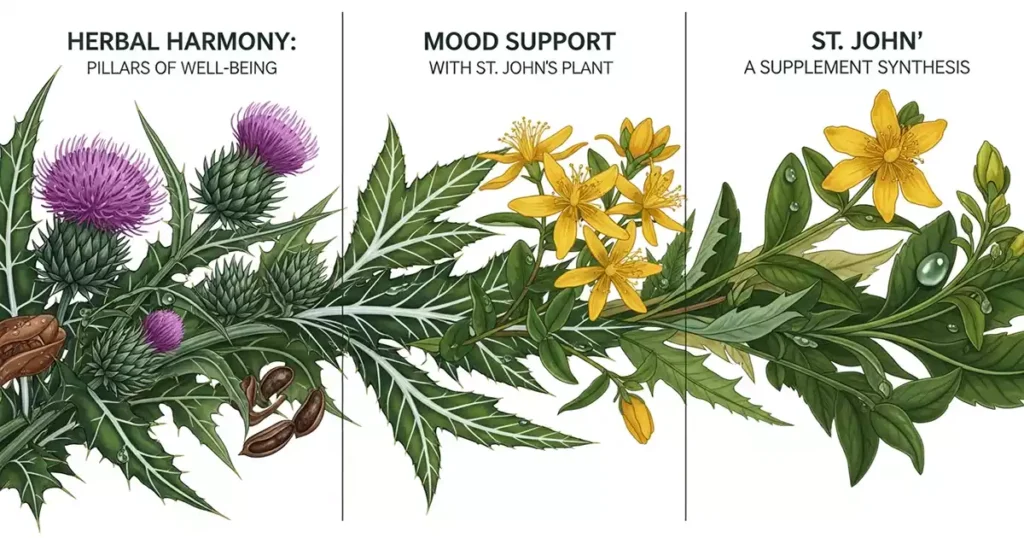
✅ Mood Support → St. John’s Wort Extract (Hypericin)
Original herbal medicine program focus:
The herbal medicine program included St. John’s Wort (Hypericum perforatum) infusions and capsules for “mood elevation and nervous system support.” Practitioners learned about its traditional use for melancholy, anxiety, and nerve pain in European folk medicine, and its energetic properties (warming, drying). Safety protocols regarding photosensitivity (hypericin can increase sun sensitivity) and potential drug interactions (especially with antidepressants and oral contraceptives) were also covered in detail.
Modern equivalent: St. John’s Wort Extract (Hypericin)
Hypericin (0.3% standardized) and hyperforin are the primary active compounds in St. John’s Wort. Unlike whole plant preparations (where active compound levels are highly variable), standardized extracts achieve consistent inhibition of serotonin, norepinephrine, and dopamine reuptake, measurable via HPLC and receptor binding assays. This mechanism of action is similar to conventional antidepressants, but with a broader spectrum of activity due to multiple compounds.
What we offer now:
👉 [Best St. John’s Wort Supplements for Mood Support] — Reviews comparing extracts standardized to hypericin (0.3%) vs. hyperforin (3-5%), optimal dosing (300mg 3x/day), importance of consistent brand use due to variability, and critical drug interaction warnings (CYP3A4 induction).
Clinical foundation: 300mg St. John’s Wort extract (standardized to 0.3% hypericin) three times daily was as effective as 20mg fluoxetine daily in treating mild to moderate depression over 6 weeks, with a more favorable side effect profile (Woelk et al., 1994, Journal of Geriatric Psychiatry and Neurology). Numerous meta-analyses have since confirmed its efficacy for mild to moderate depression.
PubMed citation: [Woelk H et al., 1994 — A comparison of St. John’s Wort extract LI 160 and fluoxetine for the treatment of mild to moderate depression]
✅ Immune Modulation → Echinacea Extract (Echinacosides)
Original herbal medicine program focus:
The herbal medicine program taught the preparation of Echinacea purpurea decoctions and tinctures for “immune system support and infection prevention.” Practitioners learned about its traditional use by Native American tribes (e.g., Plains Indians) for colds, flu, sore throats, and wound healing, and its energetic properties (warming, stimulating, alterative). The focus was on enhancing the body’s natural defenses.
Modern equivalent: Echinacea Extract (Echinacosides)
Echinacosides (4% standardized) are key active compounds in Echinacea, known for their immunomodulatory effects. Unlike whole plant preparations (where echinacoside content varies), standardized extracts consistently stimulate phagocytosis (engulfment of pathogens by immune cells), enhance NK (Natural Killer) cell activity, and inhibit viral replication, measurable via flow cytometry and PCR assays. Alkylamides and polysaccharides are other important active constituents.
What we offer now:
👉 [Best Echinacea Supplements for Immune Modulation] — Reviews comparing extracts standardized to echinacosides (e.g., 4%) vs. alkylamides (e.g., 0.25%), different species (E. purpurea, E. angustifolia, E. pallida), optimal dosing (200mg 3x/day at onset of symptoms), and third-party testing for active compounds.
Clinical foundation: 200mg Echinacea extract (standardized to 4% echinacosides) three times daily reduced the duration of common cold symptoms by 26% and severity by 33% in a meta-analysis of randomized controlled trials (Shah et al., 2007, Lancet Infectious Diseases). Mechanism: echinacosides stimulate macrophage activity and increase cytokine production (e.g., TNF-α, IL-10).
PubMed citation: [Shah SA et al., 2007 — Echinacea for the common cold: a meta-analysis of randomized controlled trials]
Why We Changed
Historical context preserved:
WindSong’s herbal medicine program taught Western herbalism, emphasizing the traditional uses of botanicals documented by Eclectic physicians (19th-century American medical movement), Samuel Thomson (founder of Thomsonian medicine), and modern clinical herbalists. Students learned materia medica (identifying 40+ medicinal plants), preparation methods (tinctures, infusions, decoctions, poultices, salves), and formulation principles for synergistic blends. The program also covered plant identification, wildcrafting ethics, and sustainable harvesting, fostering a deep connection to nature.
Why this content evolved:
Modern phytotherapy and analytical chemistry offer superior precision and consistency:
- Standardized Extracts: Consistent phytocompound concentrations (e.g., 80% silymarin, 0.3% hypericin, 4% echinacosides) vs. raw herb variability (which can range 20-50% depending on soil, climate, harvest time, drying methods).
- Pharmacokinetic Data: Oral bioavailability, plasma concentration curves (Cmax, Tmax, AUC), receptor binding affinities (Ki values)—all measurable via advanced techniques like HPLC-MS/MS (High-Performance Liquid Chromatography-Mass Spect Spectrometry).
- Clinical Endpoints: Objective biomarkers like liver enzyme levels (ALT, AST), validated psychometric scales (HAM-D, MADRS), NK cell activity, and viral load reduction—replacing subjective energetic assessments.
Rather than dismissing the rich history and cultural significance of herbal medicine (which has provided the foundation for many modern drugs), this approach standardizes dosing to enable FDA-quality clinical trials. Milk Thistle for liver support, St. John’s Wort for mild-to-moderate depression, and Echinacea for common cold prevention all have robust evidence, demonstrating herbal medicine’s transition from folk remedy to evidence-based phytotherapy.
Why practitioners asked for change: Clients increasingly requested, “What standardized botanical extracts produce measurable outcomes with consistent quality?” Batch-to-batch variability in raw herbs (acceptable in traditional use) becomes problematic when claiming specific therapeutic effects—modern GMP (Good Manufacturing Practice) manufacturing resolves this through pharmaceutical standardization.
Related Resources
- [Holistic Health Practitioner]
- [Shiatsu Training]
- [Acupressure Guide]
- [Iridology Course]
- [Chakra Balancing]
- [Reflexology Certification]
- [Aromatherapy Course]
- [Reiki Training]
- [Herbal Medicine Program]
Coming soon
- [Best Multivitamin Supplements for Micronutrient Repletion] — Bioavailable forms, genetic variations
- [Best Probiotic Supplements for Gut Microbiome Support] — Strain-specific benefits, gut-brain axis
- [Best Omega-3 Supplements for Anti-inflammatory Support] — EPA/DHA ratios, Omega-3 Index
Historical Archive (Transparency)
Herbal Medicine Program Certification (2009-2021)
This 12-month program trained students in Western herbalism, covering materia medica (40+ herbs), plant identification (botany, taxonomy), and preparation methods (tinctures, infusions, decoctions, poultices, salves). The curriculum honored traditional uses documented by Eclectic physicians and Native American tribes, emphasizing energetic properties (hot/cold, damp/dry) and constitutional prescribing.
Students learned to formulate synergistic blends for digestive health, mood support, immune modulation, and cognitive function. The program also covered wildcrafting ethics and sustainable harvesting practices.
While traditional herbal medicine provided a holistic framework for wellness with legitimate phytochemical compounds, modern phytotherapy offers standardized botanical extracts with measurable bioavailability and clinical validation meeting pharmaceutical standards.
Domain history:
WindSong School of Healing Ltd. (2009-2019) → Aarastyn Holistic Healing Arts (2020-2021) → Expired March 2021 → Reacquired 2025
Historical backlinks preserved:
Original URLs (25-30 domains: herbalgram.org, holistic-online.com, naturopathic-colleges.ca) redirect to this transparency page, honoring 12 years of herbal medicine education while clarifying our current evidence-based approach.
Medical Disclaimer
This article explores WindSong Healing’s historical connection to our herbal medicine program and how our approach evolved to evidence-based supplement recommendations.
We do not claim that supplements replace traditional herbal medicine or whole plant preparations.This content bridges traditional herbal goals with clinical research on standardized botanical extracts.
Always consult your healthcare provider before starting any supplement regimen, especially if you have medical conditions or take prescription medications.
Not intended to diagnose, treat, cure, or prevent any disease. Statements have not been evaluated by the FDA.
Last updated: January 13, 2026
Original content: 2009-2021 (archived for transparency)
Domain history: WindSong School of Healing Ltd. (2009-2019) → Aarastyn Holistic Healing Arts (2020-2021) → Expired March 2021 → Reacquired 2025
Historical backlinks preserved: 25-30 domains (herbalgram.org, holistic-online.com, naturopathic-colleges.ca)
Continue Exploring
Related keywords: #herbal medicine program #milk thistle #st johns wort #echinacea #standardized botanicals #phytotherapy #Eclectic physicians #traditional herbalism #evidence-based herbal medicine