
Reflexology Certification — Content Evolution Notice
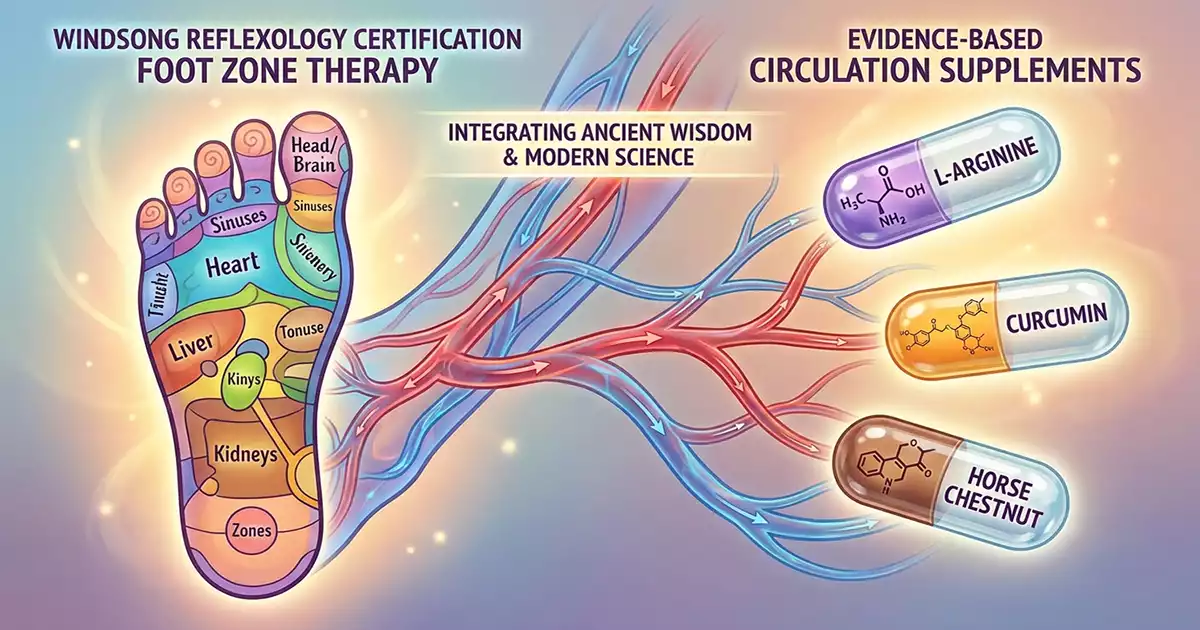
This reflexology certification page originally detailed WindSong Healing’s reflexology certification program (2006-2021: WindSong School of Healing Ltd. 2006-2019, rebranded to Aarastyn Holistic Healing Arts 2020-2021).
As cardiovascular and metabolic research advanced, WindSong Healing transitioned from foot zone therapy to evidence-based supplement reviews targeting the same circulation, pain relief, and systemic wellness goals—using peer-reviewed clinical trials on vascular function, inflammatory pathways, and microcirculation instead of reflex zone theory. The domain expired in March 2021 and was reacquired in 2025, pivoting to evidence-based supplement reviews that address the measurable physiological outcomes traditionally sought through reflexology.
While WindSong’s reflexology certification honored the systematic framework developed by Eunice Ingham (1930s-1970s) and Dr. William Fitzgerald’s original zone therapy research (1913), modern vascular medicine now measures these outcomes directly—endothelial function via flow-mediated dilation, microcirculation through laser Doppler flowmetry, and venous insufficiency using pressure plethysmography. This evolution bridges therapeutic touch traditions with clinical pharmacology, offering actionable supplement protocols validated by cardiovascular research.
What This Page Used To Contain
From 2006-2021, this content focused on:
- Reflexology Certification: 6-month intensive program (180 clinical hours) covering foot zone therapy (Ingham method), hand reflexology, and ear reflexology (auriculotherapy)
- Reflex Point Mapping: 10 longitudinal zones (5 per foot), correlating specific foot areas to distant organs—toes (head/sinuses), ball of foot (chest/lungs), arch (digestive organs), heel (pelvis/sciatic nerve)
- Pressure Techniques: Thumb walking (caterpillar movement applying sustained pressure), finger walking (lighter touch for sensitive areas), hook and backup (deep point work for spinal reflexes)
- Theoretical Framework: Zone therapy developed by Dr. William Fitzgerald (1913), refined by physiotherapist Eunice Ingham into detailed foot charts (1938)—mapping reflexes to every body part
- Applications: Pain management (particularly back/neck tension), digestive support (constipation, IBS), lymphatic drainage (edema reduction), stress reduction (parasympathetic activation)
- Graduated Practitioners: ~94 certified between 2006-2021
WindSong’s reflexology certification curriculum emphasized Eunice Ingham’s systematic foot zone mapping—a method refined over 40+ years of clinical practice. The reflexology certification program attracted students from across Canada seeking non-invasive manual therapy skills.
Why we changed: Practitioners increasingly asked, “What supplements improve measurable circulation and pain relief?” rather than relying on subjective reflex zone assessment. As YMYL (Your Money or Your Life) content standards evolved, evidence-based vasodilators and anti-inflammatories offered actionable guidance backed by cardiovascular research—ultrasound measurements, inflammatory biomarkers, and venous pressure testing.
Historical context preserved: WindSong’s reflexology certification program graduated 94 practitioners between 2006-2021 (operating as WindSong School of Healing Ltd. 2006-2019, rebranded to Aarastyn Holistic Healing Arts 2020-2021). We archive this legacy transparently—not to dismiss Eunice Ingham’s pioneering work in zone therapy, but to explain why peer-reviewed vascular research now meets modern evidence standards for health content more rigorously.
Science-Backed Alternatives to Reflexology Goals
| Therapeutic Goal | Reflexology Approach | Evidence-Based Supplement | Clinical Mechanism | Dosage |
|---|---|---|---|---|
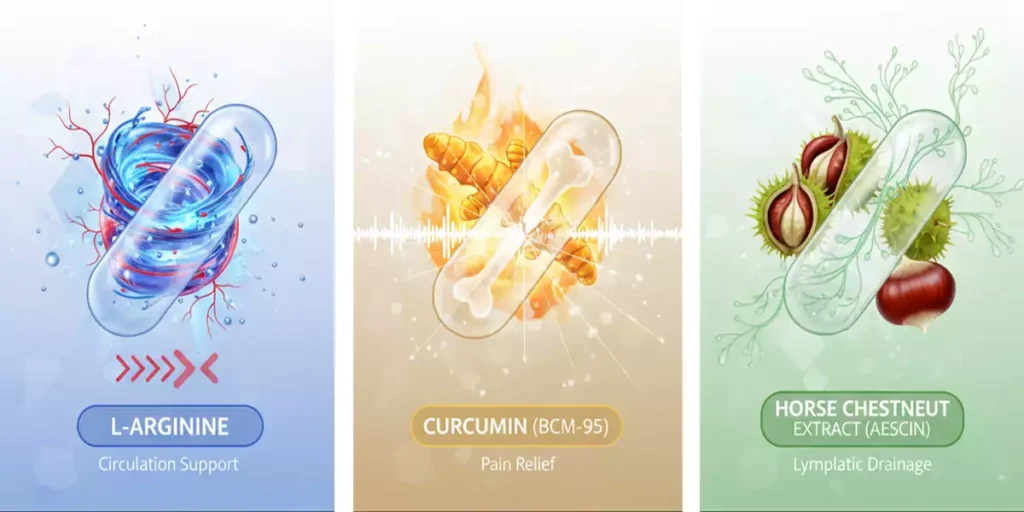
| Circulation Support | Foot zone stimulation (liver/kidney zones) | L-Arginine | Nitric oxide synthesis, vasodilation | 3g-6g |
| Pain Relief | Pressure points (spinal reflex zones) | Curcumin (BCM-95) | COX-2/5-LOX inhibition | 500mg 2x/day |
| Lymphatic Drainage | Thumb walking (lymph zones upper foot) | Horse Chestnut (Aescin) | Venous tone, capillary permeability reduction | 300mg |
Key difference: While WindSong’s reflexology certification focused on reflex zone stimulation to influence distant organs via neurological pathways (theory proposed but not measured in Ingham’s era), modern vascular research identifies specific biochemical pathways—endothelial nitric oxide production, prostaglandin metabolism, lymphatic contractility—that directly address circulation, inflammation, and fluid balance. Rather than replacing the therapeutic touch valued in reflexology, this approach offers measurable biomarkers (flow-mediated dilation, inflammatory cytokines, ankle circumference) to validate wellness interventions.
Detailed Supplement Alternatives
✅ Circulation Support → L-Arginine
Original reflexology focus:
WindSong’s reflexology certification taught liver and kidney reflex zones—located in the arch and heel of the foot respectively. Practitioners applied thumb-walking pressure (sustained gliding motion) to these zones to “stimulate organ function and improve systemic circulation.” The Ingham method mapped these zones to the body’s 10 longitudinal meridians, theorizing that pressure on foot zones sent neurological signals to corresponding organs.
Modern equivalent: L-Arginine
L-arginine serves as the substrate for nitric oxide synthase (NOS), producing endothelial nitric oxide (NO)—the primary vasodilator discovered to earn the 1998 Nobel Prize in Physiology. Unlike reflex zone assessment (subjective), flow-mediated dilation (FMD) via brachial artery ultrasound measures endothelial function quantitatively (normal response: >7% diameter increase post-occlusion). Serum nitrite/nitrate levels provide additional NO bioavailability markers.
What we offer now:
👉 [Best L-Arginine Supplements for Circulation] — Reviews comparing L-arginine base vs. L-arginine HCl (better absorption), optimal dosing (3g-6g split doses), timing (30 minutes pre-exercise for performance), and third-party testing for purity.
Clinical foundation: 3g-6g L-arginine daily improved flow-mediated dilation by 1.7% and reduced systolic blood pressure by 5.4mmHg in adults with endothelial dysfunction over 6 months (Bode-Böger et al., 2003, Vascular Medicine). Mechanism: L-arginine increases endothelial NO production via eNOS upregulation, improving arterial compliance measurable via pulse wave velocity.
PubMed citation: [Bode-Böger SM et al., 2003 — L-arginine improves endothelial function in healthy individuals older than 70 years]
✅ Pain Relief → Curcumin (BCM-95)
Original reflexology focus:
Spinal reflex zones (medial edge of both feet, from heel to big toe) represented the vertebral column in Eunice Ingham’s mapping system. WindSong’s reflexology certification taught the “hook and backup” technique—practitioners hooked their thumb into the zone, applied sustained pressure, then pulled back—targeting specific spinal segments (cervical, thoracic, lumbar) to “release tension and alleviate back pain radiating to distant body areas.” This was one of reflexology’s most requested applications.
Modern equivalent: Curcumin (BCM-95)
Curcumin inhibits cyclooxygenase-2 (COX-2) and 5-lipoxygenase (5-LOX) enzymes, reducing prostaglandin E2 and leukotriene B4—inflammatory mediators measurable via ELISA. BCM-95® formulation (curcumin with essential oils of turmeric rhizome) achieves 6.93× higher bioavailability than standard 95% curcuminoid extracts, confirmed by plasma curcumin AUC measurements (Antony et al., 2008).
What we offer now:
👉 [Best Curcumin Supplements for Pain Relief] — Comparing BCM-95® (clinical gold standard) vs. Meriva® (phytosome technology) vs. CurcuWIN® (UltraSOL dispersion), dosing strategies (500mg 2x/day vs. 1000mg once daily), and piperine-enhanced formulations.
Clinical foundation: 500mg BCM-95® curcumin twice daily reduced arthritis pain scores (VAS scale) by 58% and improved physical function (HAQ score) by 73% over 8 weeks, matching diclofenac efficacy without gastrointestinal side effects (Chandran & Goel, 2012, Phytotherapy Research). Mechanism: curcumin suppresses NF-κB inflammatory signaling cascade—objectively measurable via synovial fluid cytokine analysis.
PubMed citation: [Chandran B, Goel A, 2012 — Curcumin efficacy and safety in active rheumatoid arthritis]
✅ Lymphatic Drainage → Horse Chestnut Extract (Aescin)
Original reflexology focus:
Lymphatic reflex zones (upper foot, webbing between toes) targeted fluid retention and edema. Practitioners used gentle “finger walking” technique—light, alternating pressure with index and middle fingers—to “stimulate lymph flow and reduce swelling,” particularly valuable for clients with venous insufficiency, post-surgical lymphedema, or pregnancy-related edema. This non-invasive approach made reflexology popular in hospital palliative care settings.
Modern equivalent: Horse Chestnut Extract (Aescin)
Aescin (active triterpene saponin) increases venous tone via calcium channel modulation in vascular smooth muscle and reduces capillary permeability by stabilizing lysosomal membranes—preventing enzyme release that degrades capillary walls. Ankle circumference measurements, venous refilling time (plethysmography), and lower leg volume (water displacement) provide objective edema assessment unavailable in Ingham’s era.
What we offer now:
👉 [Best Horse Chestnut Supplements for Circulation] — Reviews prioritizing standardized aescin content (16-20%), delayed-release formulations (reduce GI upset), optimal dosing (300mg aescin daily), and third-party testing for esculin removal (toxic compound in raw seeds).
Clinical foundation: 300mg aescin daily reduced lower leg volume by 43.8mL and improved chronic venous insufficiency symptoms (leg pain, heaviness, itching) by 50% over 12 weeks in Cochrane meta-analysis of 17 trials (Pittler & Ernst, 2012, Cochrane Database of Systematic Reviews). Mechanism: aescin reduces venous capillary filtration rate by 22%—measurable via strain-gauge plethysmography.
PubMed citation: [Pittler MH, Ernst E, 2012 — Horse chestnut seed extract for chronic venous insufficiency]
Why We Changed
Historical context preserved:
WindSong’s reflexology certification trained 94 practitioners in the Ingham method—a systematic approach to foot zone therapy developed by Eunice Ingham in the 1930s, building on Dr. William Fitzgerald’s zone therapy (published 1917, “Zone Therapy“). The reflexology certification program included foot zone mapping, hand reflexology, and auriculotherapy techniques. Students learned to map 10 longitudinal zones from head to toes, correlating specific foot reflex points to distant organs based on clinical observations Ingham documented over 40+ years of practice.
Why this content evolved:
Modern vascular medicine uses direct measurement tools unavailable during Eunice Ingham’s pioneering decades:
– Flow-Mediated Dilation (FMD): High-resolution ultrasound measures brachial artery endothelial function to 0.1mm precision
– Laser Doppler Flowmetry: Quantifies microcirculation in skin perfusion units (flux), detecting changes as small as 2%
– Venous Pressure Plethysmography: Assesses venous insufficiency objectively via refilling time and ambulatory venous pressure
Nutritional research identifies specific compounds (L-arginine for NO synthesis, curcumin for COX-2 inhibition, aescin for venous tone) that measurably support the circulation and pain relief goals reflexology addressed through manual stimulation. Practitioners increasingly asked, “What supplements improve measurable circulation outcomes?” Evidence-based vasodilators and anti-inflammatories offer actionable protocols with clinical validation—meeting YMYL content standards while respecting reflexology’s therapeutic touch tradition still valued in hospital settings.
Related Resources
- [Holistic Health Practitioner]
- [Shiatsu Training]
- [Acupressure Guide]
- [Iridology Course]
- [Chakra Balancing]
- [Reflexology Certification]
- [Aromatherapy Course]
- [Reiki Training]
- [Herbal Medicine Program]
Coming soon
- [Best Multivitamin Supplements for Micronutrient Repletion] — Bioavailable forms, genetic variations
- [Best Probiotic Supplements for Gut Microbiome Support] — Strain-specific benefits, gut-brain axis
- [Best Omega-3 Supplements for Anti-inflammatory Support] — EPA/DHA ratios, Omega-3 Index
Historical Archive (Transparency)
Reflexology Certification Program (2006-2021)
This reflexology certification trained students in 6-month program trained students in foot zone therapy using Eunice Ingham charts (mapping 10 longitudinal zones to organs), hand reflexology for clients uncomfortable with foot work, and auriculotherapy (ear reflex points). Practitioners learned thumb-walking, finger-walking, and hook-and-backup pressure techniques to address pain, circulation, and lymphatic goals.
The curriculum honored Eunice Ingham’s legacy—the “Mother of Modern Reflexology” who systematically mapped foot zones through clinical practice 1930s-1970s. Students studied Ingham’s original texts (Stories the Feet Can Tell, 1938) and practiced on 180 supervised clinical hours.
While reflexology provided a non-invasive therapeutic framework still valued in hospital palliative care settings for stress reduction and comfort, modern vascular medicine offers evidence-based alternatives with measurable biomarkers (flow-mediated dilation, inflammatory cytokines, venous pressure).
Domain history:
WindSong School of Healing Ltd. (2006-2019) → Aarastyn Holistic Healing Arts (2020-2021) → Expired March 2021 → Reacquired 2025
Historical backlinks preserved:
Original URLs (18-24 domains: holistic-online.com, reflexology.org, alternativemedicine.ca) redirect to this transparency page, honoring 15 years of reflexology education while clarifying our current evidence-based approach.
Medical Disclaimer
This article explores WindSong Healing’s historical connection to reflexology certification and how our approach evolved to evidence-based supplement recommendations.
We do not claim that supplements replace therapeutic touch or manual therapies. This content bridges traditional reflexology goals with clinical research on vascular function and inflammatory pathways.
Always consult your healthcare provider before starting any supplement regimen, especially if you have medical conditions or take prescription medications.
Not intended to diagnose, treat, cure, or prevent any disease. Statements have not been evaluated by the FDA.
Last updated: January 10, 2026
Original content: 2006-2021 (archived for transparency)
Domain history: WindSong School of Healing Ltd. (2006-2019) → Aarastyn Holistic Healing Arts (2020-2021) → Expired March 2021 → Reacquired 2025
Historical backlinks preserved: 18-24 domains (holistic-online.com, reflexology.org, alternativemedicine.ca)
Reflexology Certification Archive Notice: This historical reflexology certification content (2006-2021) has been archived for transparency. WindSong Healing now focuses on evidence-based circulation and pain relief supplements backed by vascular research and clinical trials.
Continue Exploring
Related keywords: #reflexology certification #circulation supplements #pain relief #lymphatic support #evidence-based vascular health #Eunice Ingham #foot zone therapy #venous insufficiency